2025课标官宣新变化:图文结合赋能阅读,聚焦多模态语篇理解
2025年新课标中提出“理解多模态语篇传递的要义、主要信息和意图”这一语言能力要求,“坚持改革创新”这一考试基本原则。阅读理解采用图文结合的多模态呈现形式,语篇以文字为核心,搭配图表构建复合型阅读场景,打破传统纯文字阅读的单一模式,强化“看+读”结合的信息整合能力。简言之,传统阅读靠“文字定位”,新题靠“图文互证”。说白了就是:既要会读文章,也要会读图,还要能把两边的信息串起来。比如科技说明文配示意图、应用文配表格等,这些可能都是未来高考的新尝试类型题。
图文题不是洪水猛兽,3步搞定,轻松拿捏
1. 先“看图”再“读文”,别搞反顺序
拿到带图的阅读题,先花30秒扫一眼图:标题、标注、图例是什么?再读文字里的内容,可能瞬间就懂了。
2. 学会“图文互锁”,找对应信息
做题时,看到和图相关的选项,立刻回到图里找证据。对比文字验证,比纯读文字快一倍。
3. 平时练题别跳过图,养成“看+读”习惯
刷真题和模拟题时,遇到带图的文章,别直接忽略图!刻意训练“先看图、再读文”的流程,形成肌肉记忆,考场上就不会慌。
2025年阅读理解A篇就是典型的多模态文本 (Multimodal Text): 这是本篇最显著的特点。它结合了连续性文本 (段落文字)和 非连续性文本 (饼状图)。图表并非装饰,而是承载了关键信息(第21题答案直接来源于图表),并要求学生具备读图能力和图文结合理解的能力。
【2025年全国Ⅰ卷】阅读A篇:交通脱碳与绿色能源技术革新
The greening of planes, trains and automobiles
Moving goods and people around the world is responsible for a large part of global CO₂emissions (排放). As the world races to decarbonize everything, it faces particular problems with transportation – which accounts for about a quarter of our energy-related greenhouse gas emissions. Here’s the breakdown of the emissions in 2018 for different modes of transport.
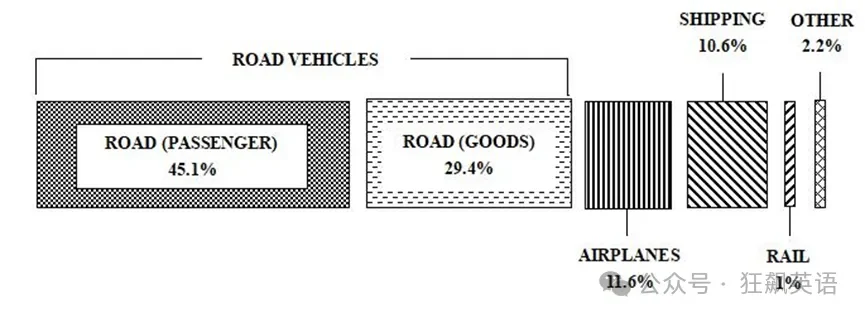
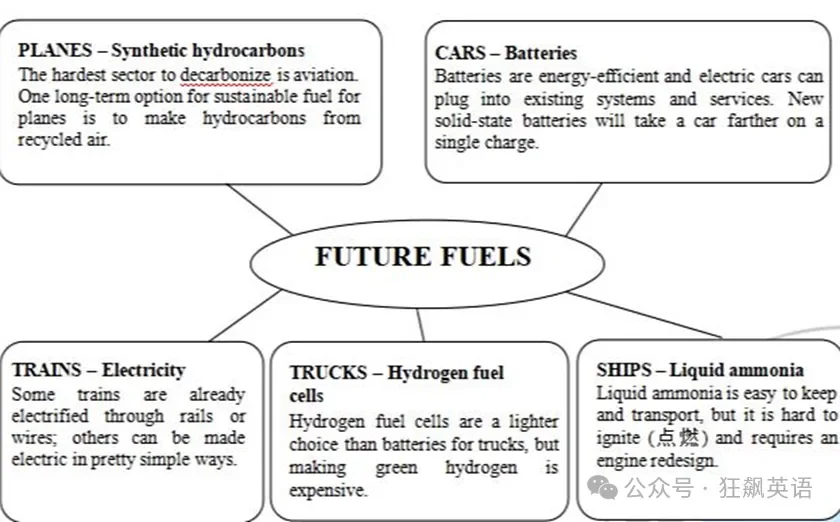
The fuels for transport need to be not just green, cheap and powerful, but also lightweight and safe enough to be carried around. Each mode of transport has its specific fuel needs. Much is still to be settled, but here are some of the solutions to get us going green.
This energy transition (变革) is global, and the amount of renewable energy the world will need is “a little bit mind-blowing,” says mechanical engineer Keith Wipke at the National Renewable Energy Laboratory. It’s estimated that the global demand for electricity could more than double by 2050. Fortunately, analyses suggest that renewables are up to the task. “We need to speed up the development of green energy, and it will all get used,” says Wipke.
21. What percentage of global transport emissions did road vehicles account for in 2018?
A. 11.6%.B. 45.1%. C. 74.5%. D. 86.1%.
22. Which mode of transport can go green comparatively easily?
A. Planes.B. Trucks. C. Trains. D. Ships.
23. What does Wipke suggest regarding energy transition?
A. Limiting fuel consumption.
B. Putting more effort into renewables.
C. Improving energy efficiency.
D. Making electricity more affordable.
本文是一篇说明文,文章指出交通运输是全球二氧化碳排放的重要来源,介绍不同交通方式减排的未来燃料方案,强调能源转型需大量可再生能源。
答案详解:
21. C。事实细节题。题干含义:What percentage of global transport emissions did road vehicles account for in 2018?2018年道路车辆排放占全球交通排放的百分比是多少?
根据第一个图表可知,ROAD VEHICLES 包括 ROAD (PASSENGER)和 ROAD (GOODS)两部分,它们在 2018 年全球交通领域的温室气体排放总量中的比重分别是 45.1%和 29.4%,相加即为 ROAD VEHICLES 的比重 74.5%。因此应选C。
22. C。 推理判断题 题干含义:Which mode of transport can go green comparatively easily?哪种交通方式比较容易实现绿色环保?
根据第二个图表可知, PLANES – Synthetic hydrocarbons 部分,The hardest sector to decarbonize is aviation. One long-term option for sustainable fuel for planes is to make hydrocarbons from recycled air.最难脱碳的行业是航空业。飞机可持续燃料的一个长期选择是从循环空气中制造碳氢化合物。
TRUCKS – Hydrogen fuel cells 部分,Hydrogen fuel cells are a lighter choice than batteries for trucks, but making green hydrogen is expensive.氢燃料电池是一种比卡车电池更轻的选择,但制造绿色氢是昂贵的。
TRAINS – Electricity 部分,Some trains are already electrified through rails or wires; others can be made electric in pretty simple ways.一些火车已经通过铁轨或电线实现了电气化;其他的可以用非常简单的方法实现电气化。
SHIPS – Liquid ammonia 部分,Liquid ammonia is easy to keep and transport, but it is hard to ignite (点燃) and requires an engine redesign.液态氨易于保存和运输,但很难点燃,需要重新设计发动机。通过比较应选C。
23. B。事实细节题。 题干含义:What does Wipke suggest regarding energy transition?关于能源转型,Wipke提出了什么建议?
根据关键词 Wipke 可以把关键信息定位到文章最后一段,再根据末句“We need to speed up the development of green energy, and it will all get used,” says Wipke.Wipke说:“我们需要加快绿色能源的发展,它将被全部使用。”B. Putting more effort into renewables.加大对可再生能源的投入。因此应选B。
其它选项含义:A. Limiting fuel consumption.限制燃料消耗。C. Improving energy efficiency.提高能源效率。D. Making electricity more affordable.让人们更能负担得起电力。
2025年12月广东光大联考(广东二调)第二次调研英语–阅读A篇
If you’re concerned about the cost of gas and the environmental impact of gas-powered cars, and don’t want to worry about the charging challenges associated with the pure electric vehicle (EV), it’s time to take a closer look at a hybrid(混合的)electric vehicle (HEV). While salespeople might simply advise you to “plug in daily and use gas for longer trips,” understanding the underlying mechanics is key to determining if an HEV truly fits your needs. Essentially, an HEV offers you the best of gas cars and EVs.
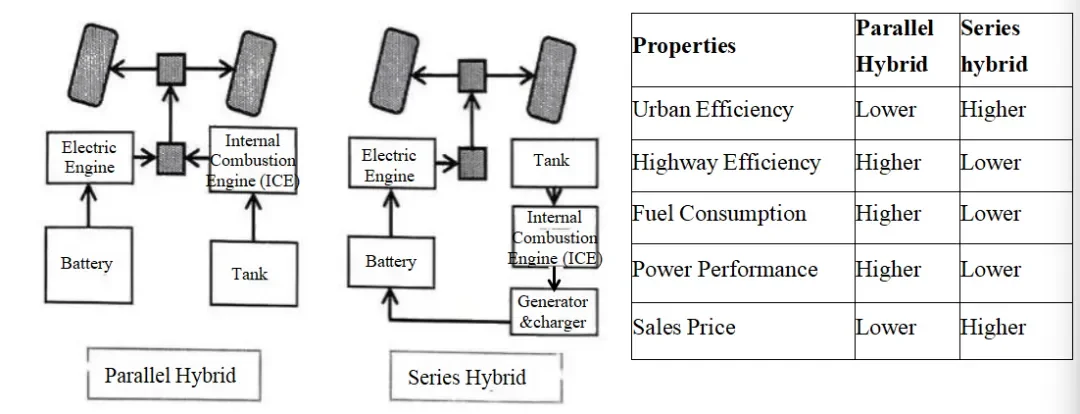
An HEV has two sources of power:an internal combustion(燃烧)engine (ICE) and at least one electric motor. There are two main types of HEV: parallel(并联式)hybrid and series hybrid.
The parallel hybrid (PHEV) aims to keep the core designs of the conventional gas-powered vehicles while lowering the operation costs and improving environmental performance. Reduced to its basics, its system uses ICE and electric motors to power the wheels——either together or independently. This structure performs reliably on long-distance journeys and complex road conditions, where the combustion engine operates efficiently.
In the case of series hybrid (SHEV), the vehicle runs only on electricity, which is from the battery. When the battery is exhausted, the ICE switches on—not to drive the wheels directly, but to power the generator and charge the battery. This setup offers smoother and quieter driving operation which is similar to pure electric vehicles. It’s generally more eco-friendly, and further reduces the cost of use.
In today’s market, conventional gas cars are going significantly cheaper, while stylish pure electric vehicles have become symbols of modern status. The HEV, striking a practical balance between these two extremes, certainly deserves a closer look.
21. What is an advantage of HEVs compared with other types of vehicles?
A. They’re simpler in design. B. They’re cheaper to purchase.
C They’re more eco-friendly. D. They’re more practical to use.
22. What does the ICE in a series hybrid car directly work on?
A. Replacing the generator. B. Driving the wheels.
C. Starting the electric motor. D. Charging the battery.
23. In which aspect are PHEVs generally better than SHEVs?
A. Mountain road driving. B. In-city transportation.
C. Waste gases production. D. Vehicle running costs.
【答案】21-23 DDA
【语篇导读】本文是一篇说明文。文章介绍了混合动力汽车(HEV) 及其两种主要类型 ——并联式混合动力(PHEV) 和串联式混合动力(SHEV) 的工作原理与性能特点,旨在帮 助读者根据自身需求进行选择。
第21题.D 细节理解题。解析:根据第一段“HEV offers you the best of gas cars and EVs”及最后一段“striking a practical balance between these two extremes”可知,HEV的核心优势在于它结合了汽油车和电动车的优点,取得了“实用的平衡”。故选D。
第22题.D 细节理解题。解析:根据第四段对SHEV 的描述 “the ICE switches on—not to drive the wheels directly, but to power the generator and charge the battery” 可知,ICE的直接作用是驱动发电机并为电池充电。选项B是PHEV的工作方式。故选D
第23题.A 细节理解题。解析:题目问PHEV在哪个方面优于SHEV。 根据第三段, PHEV的系统 “performs reliably on long-distance journeys and complex road conditions”, 并且表格显示其在“Power Performance”上更高。因此,在应对像“山路驾驶”这类复杂路况时,PHEV表现更佳。故选A。
2025年12月浙江学军中学首考适应性考试英语–阅读A篇
AI and Energy: Is AI Increasing Power Demand?
AI consumes large amounts of energy: a single ChatGPT response uses around 10 times the electricity of a Google search, and its more than 400 million weekly active users increase demand. DeepSeek claimed higher energy efficiency but also faced doubts, keeping AI’s energy use a persistent concern. Here is the daily energy comparison between ChatGPT and Google search.

Given the energy consumption, AI adoption won’t slow as firms view it as essential, so a smart strategy is needed to employ AI’s benefits while meeting sustainable goals. Luckily, industry experts are developing various solutions to address this challenge.
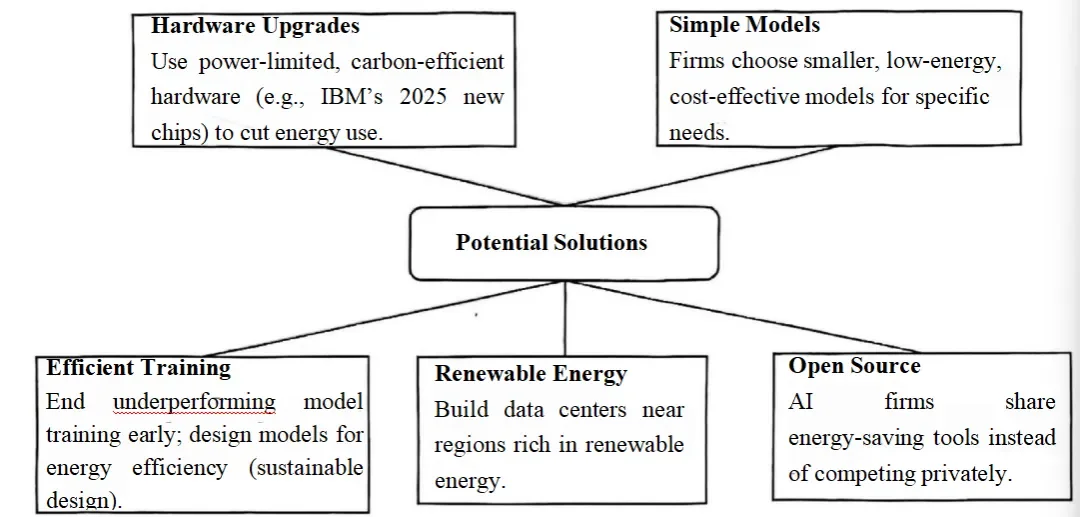
The AI-related energy risks have gained visibility, triggering public awareness and action. Yet focusing on energy alone cannot break the cycle of compounding environmental and operational pressures. “To address AI-energy risks and unlock long-term value, companies and investors must move beyond their narrow roles in the AI value chain. They should pursue strategies that create shared value by advancing business goals while benefiting society and the environment,” notes Lauren Smart in World Economic Forum.
21. How much more daily energy does ChatGPT consume than Google Search?
A. 632.2 MWh. B. 621.4 MWh. C. 610.6 MWh. D. 10.8 MWh.
22. Which of the following is an effective measure to cut AI energy use?
A. Adopting energy-saving chips. B. Selecting larger models.
C. Establishing more data centers. D. Encouraging firm competitions.
23. According to Lauren Smart, AI companies should adopt a mission that _____.
A. creates shared value. B. gains public recognition.
C. follows existing regulations. D. maximizes investor’s profits.
【答案】21-23 CAA
【语篇导读】本文是一篇说明文。文章通过对比ChatGPT与谷歌搜索的能耗数据,指出AI发展加剧能源需求,并呼吁企业采取创造共享价值的策略,以实现AI效益与可持续目标的平衡。
第21题.C 数据对比与简单计算。解析:表格中 ChatGPT 每日能耗为 621.4 MWh,谷歌搜索为 10.8 MWh,两者差值为 621.4 – 10.8 = 610.6 MWh。故选C。
第22题. A 对节能措施的理解。 解析:文章提到行业专家正开发解决方案以降低AI能耗,结合常识,采用节能芯片(A)是直接有效的技术手段;其他选项如更大模型(B)、更多数据中心(C)、鼓励竞争(D)均可能增加能耗。故选A。
第23题.A 细节理解与观点归纳。解析:文章直接引用 Lauren Smart 的观点:企业应追求 “创造共享价值”(strategies that create shared value),在实现商业目标的同时造福社会与环境。故选A
发表回复