本次为大家整理的是2026届广东省纵千文化高三8月摸底检测(6008C)英语试卷(共8页),高清完整版PDF下载。这套试卷贴合2026届新高考英语命题方向,覆盖高中英语核心考点,适合高三同学一轮复习刷题自测、查漏补缺,也可供高中英语老师作为复习备课资料使用。
试题预览:
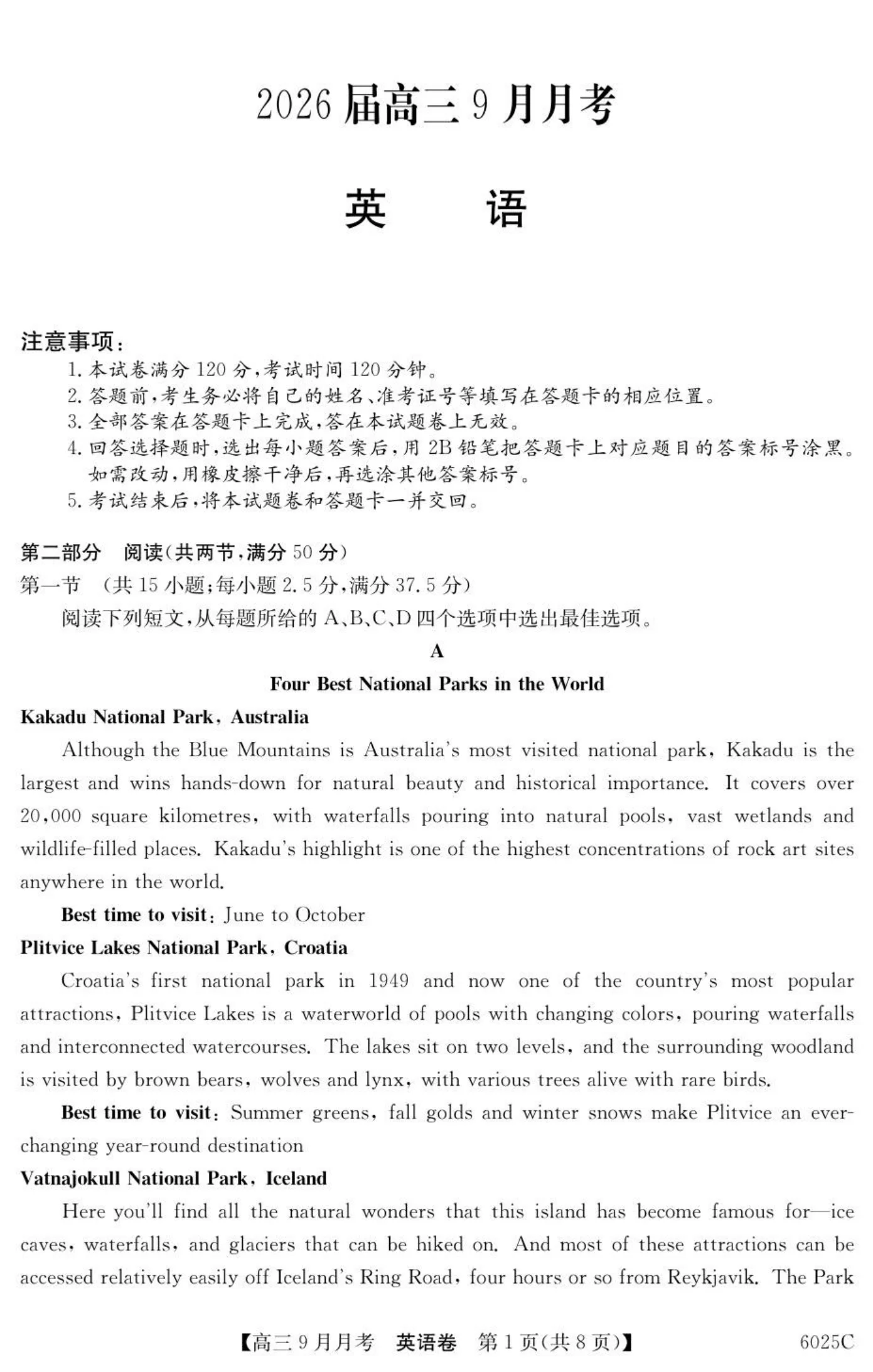
第二部分 阅读(共两节,满分 50 分)
第一节(共 15 小题;每小题 2.5 分,满分 37.5 分)
阅读下列短文,从每题所给的 A、B、C、D 四个选项中选出最佳选项。
A
Stretching from coast to coast, the Trans-Canada Highway stitches together the vast landscapes of Canada. But it’s the British Columbia section that truly shines brightest. Take your time to drive this route: six days is ideal.
Day 1: Vancouver
The adventure begins in Vancouver, a playground for outdoor activities, with mountains, beaches and forests just moments from its urban core. Cycle the 6.6-mile seawall of Stanley Park—on one side you’ll have ancient rainforest; on the other, tall modern buildings reflect in the waters of the Burrard Inlet and English Bay.
Day 2: Fraser Valley
For the countryside appeal of the Fraser Valley, schedule a stop at Singletree Winery in Abbotsford, a family-owned property specializing in cool-climate wines. For lunch, try Restaurant 62 nearby, which features local food. Drive to Hope, and on arrival, film fans might recognize the picturesque small town as the backdrop in the movie Rambo: First Blood.
Day 3: Lytton
In the town of Lytton, you can tackle the water flowing very fast with Kumsheen Rafting Resort. Don’t miss the Lytton Chinese History Museum, recently rebuilt after a 2021 wildfire, which offers a deep dive into the vital contributions of early Chinese settlers to BC.
Day 4: Kamloops
Steep canyons (陡峭的峡谷) flatten out on the two-hour drive to Kamloops, known for its independent galleries. Don’t miss the Kamloopa Powwow, a summer celebration of native culture, music and dance.
Day 5: Revelstoke
Here, a local businessman spent decades painstakingly relocating abandoned buildings from the frontier era to create his own ghost town museum. Don’t miss the Nels Nelsen ski jump statue in Mount Revelstoke National Park, which shows respect to Canada’s winter sports athletes.
Day 6: Golden
Saving the best for last, the highway cuts a path through the greatness of Glacier National Park. Golden, a tiny town with big attractions, delivers an amazing finish. Feel your heart race by stepping onto the Golden Skybridge, Canada’s highest suspension bridge. Drive to the Meadows in the Sky Parkway, where springtime fields of flowering lupins and forget-me-nots explode in various colors.
-
What are tourists advised to do in Fraser Valley?
A. Avoid drinking cool-climate wines.
B. Try role-playing in a famous movie.
C. Enjoy local food at Restaurant 62.
D. Purchase a family-owned property.
-
On which day can tourists learn about the history of Chinese people?
A. Day 1.
B. Day 3.
C. Day 4.
D. Day 5.
-
Where might those interested in extreme sports go?
A. Stanley Park.
B. The Sky Parkway.
C. Glacier National Park.
D. Mount Revelstoke National Park.
B
After moving house for the 11th time, Barbara Iweins decided to take stock of her life—and everything in it.
Going from room to room, Iweins spent almost five years documenting every single object she owns, from loose Lego bricks and old key chains to remote controls and kitchen utensils. The resulting 12,795 images offer a true portrait of the Belgian photographer. All of the images were posted on social media and many users liked those images a lot.
While photographing her possessions, Iweins categorized them by color, material and the frequency with which they were used (from once a day to never). Her project provided plenty of insights, both surprising and amusing. Blue is the dominant color in her house accounting for 16% of all items, while 12% of her clothes are black. Of the items in her bathroom, 43% are made from plastic. Some 90% of the cables in her house are never used, and 19% of her books remain unread.
And while often ordinary, individual objects contain the stories of her life: The old novel she took from her father’s library when she was 16, the hospital bracelet she wore when giving birth. Over the years, Iweins spent an average of 15 hours a week on the project.
_1.webp)
英语试卷_1.webp)
英语试卷_1.webp)
英语试卷_1.webp)